Module 01 · 20 min
The UX design process
UX work follows a design-thinking loop. You research first, turn findings into clear documents, sketch structure, build a prototype people can try, then change the work from feedback.
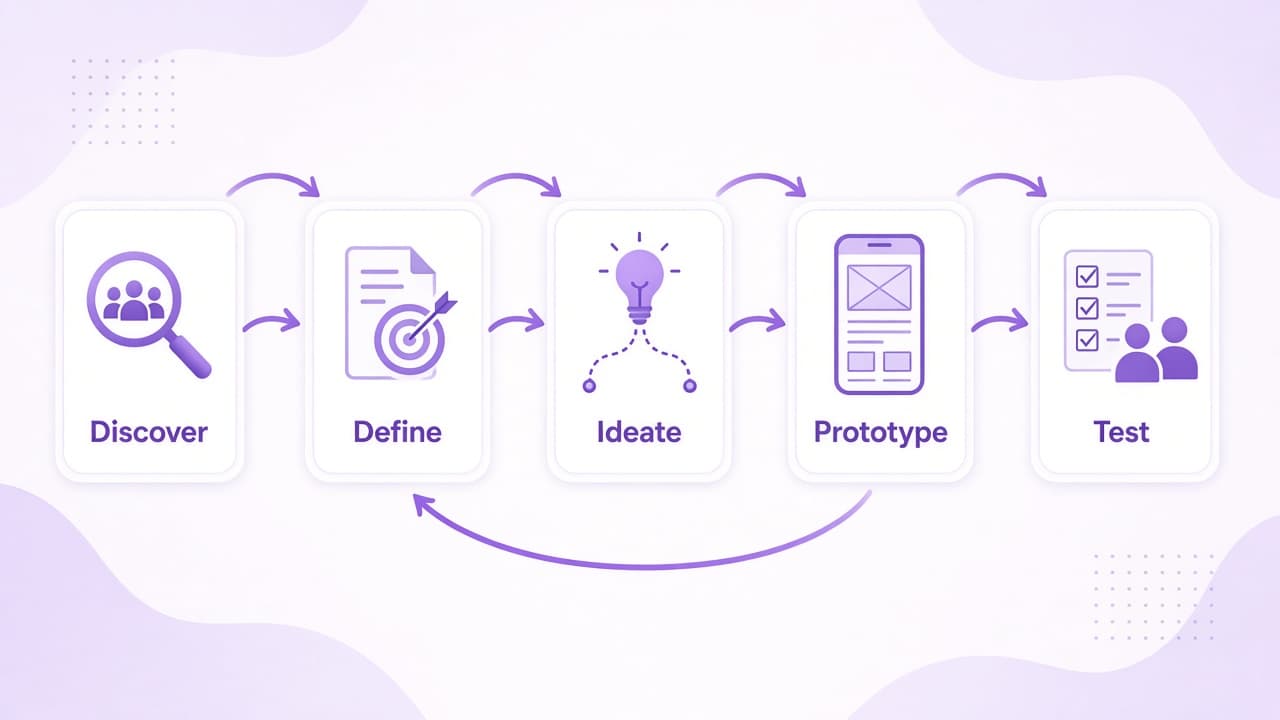
- 01Discover
- 02Define
- 03Ideate
- 04Prototype
- 05Test
1. Discover (empathy)
Understand business goals and user goals. Stakeholder interviews, competitor analysis, and user research belong here. This stage is also called the empathy step — you learn before you invent.
2. Define
Use what you learned in discover to make shared documents: a user persona, an empathy map, and related research summaries so the problem is agreed before you design screens.
3. Ideate
Design the structure of the product: information architecture, flow charts, and the user journey. You explore more than one path before locking a layout.
4. Prototype
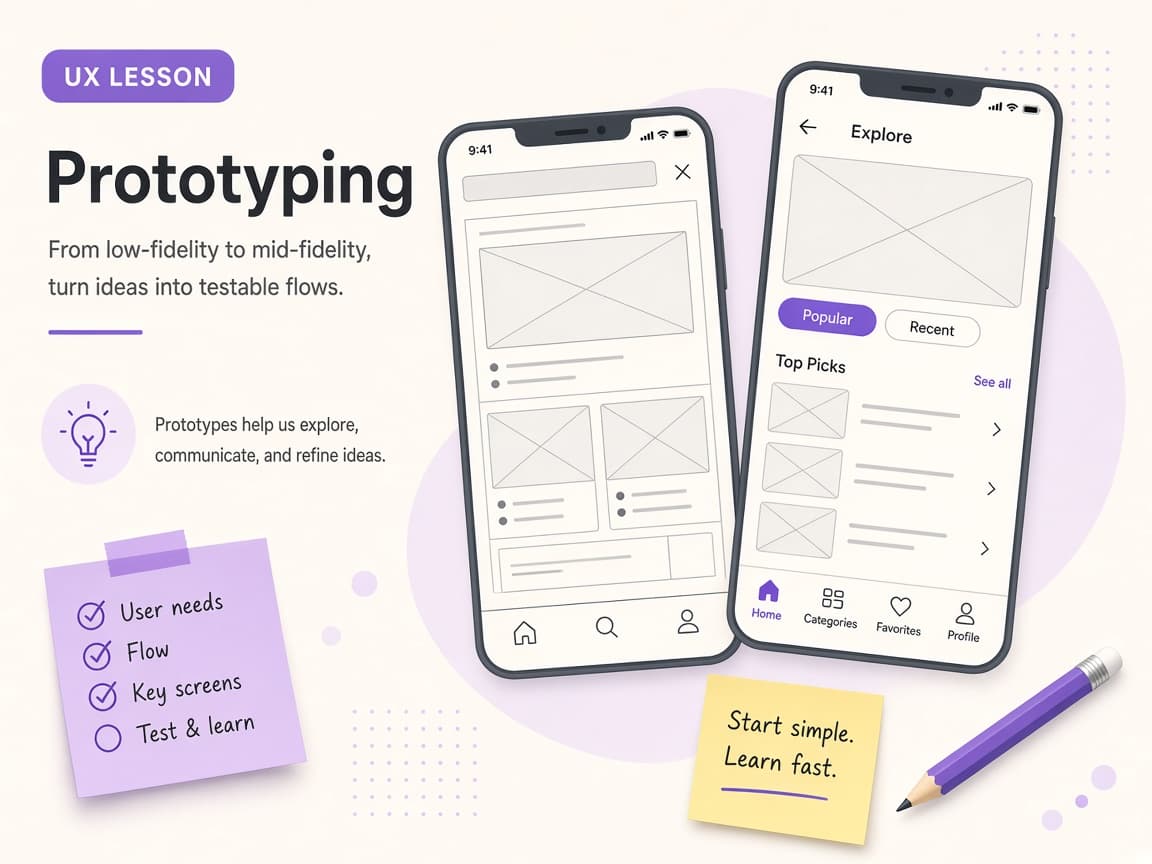
A prototype can be wireframes or higher-fidelity layouts. It shows how the product will function so someone can try the path without a finished app.
5. Test
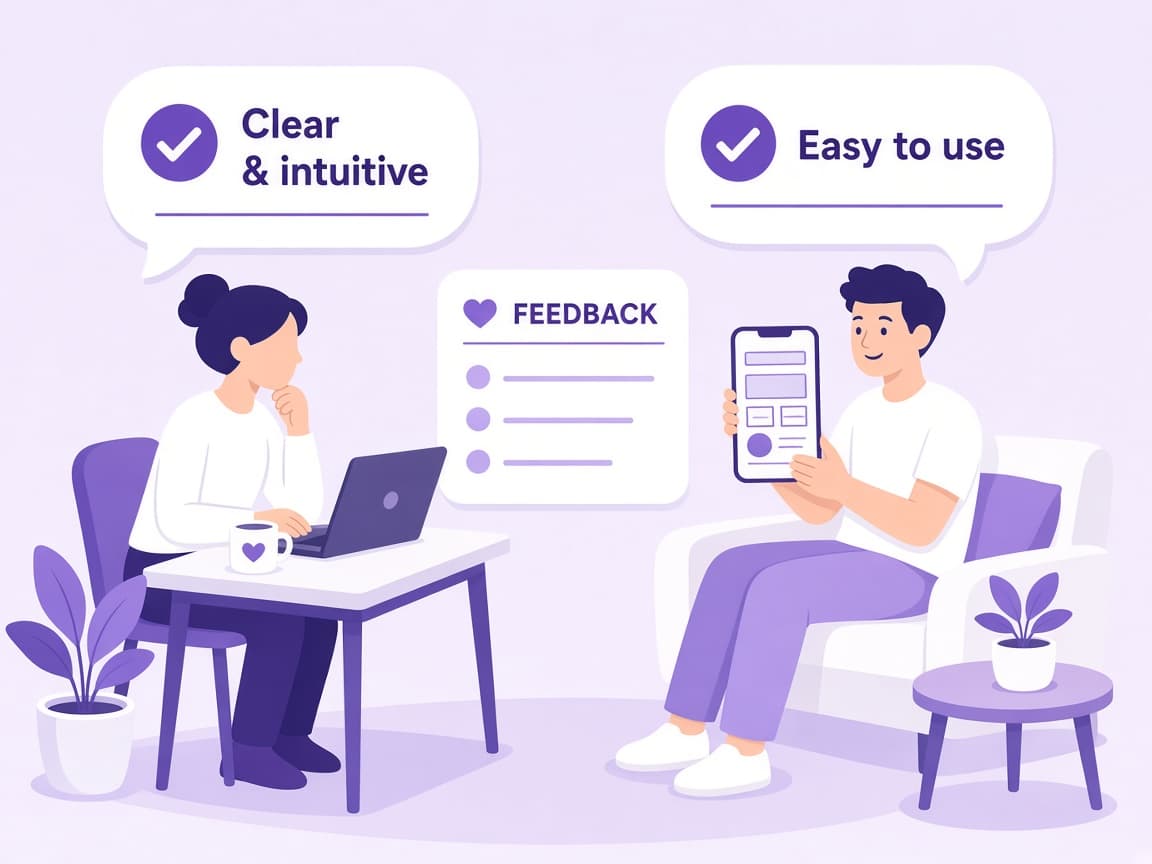
Test the prototype with real people. Change the work from their feedback. You can loop back to an earlier stage — do not skip discover because a screen looked interesting.
Steps for a new mobile app
On a typical mobile-app project, the same process shows up as a practical checklist. Later modules walk each step in more detail.
- Competitor research and analysis
- User research
- User persona and empathy mapping
- Information architecture
- User flow and low-fidelity wireframes
- User journey and user testing
- UX case study presentation